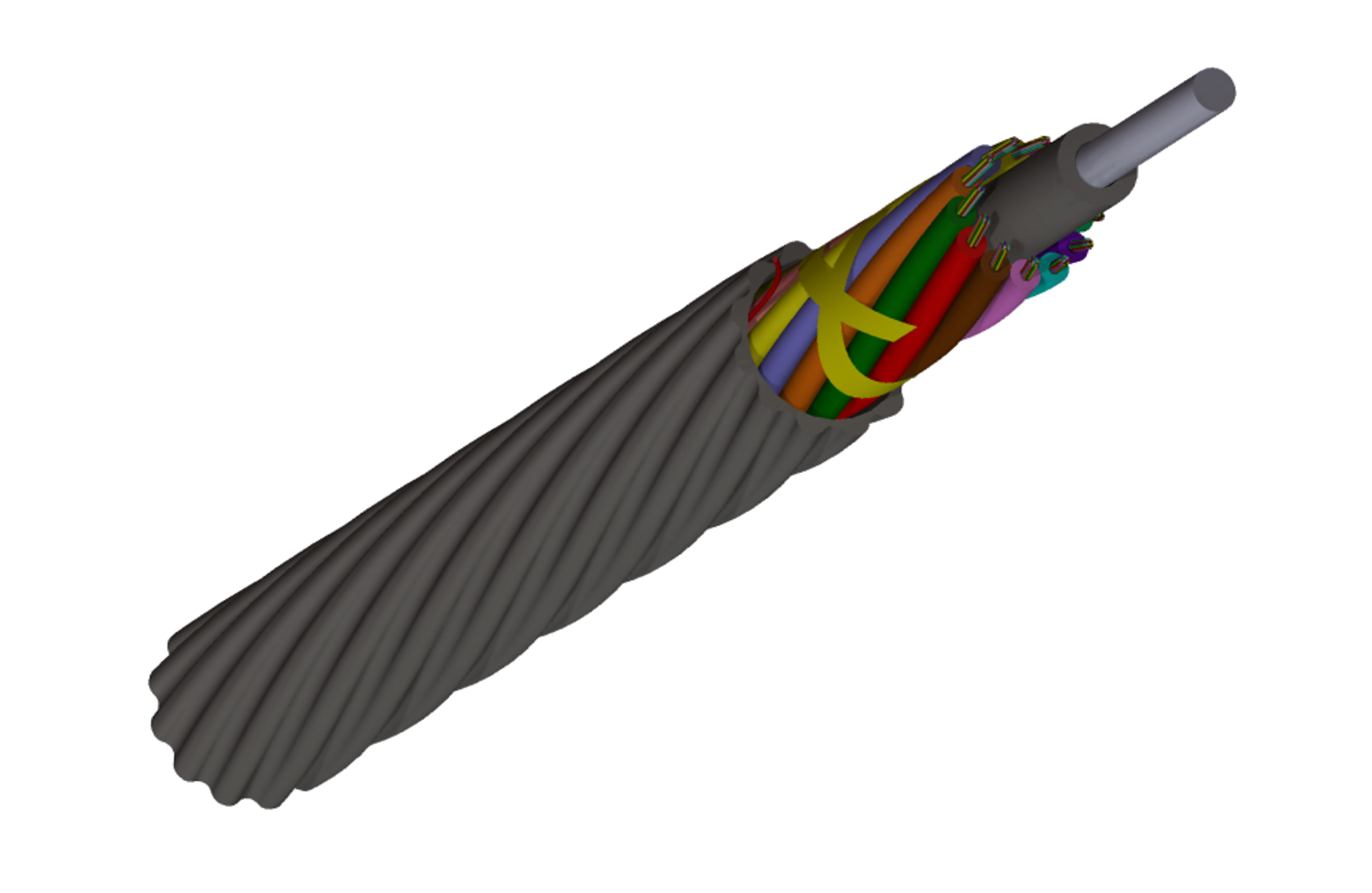
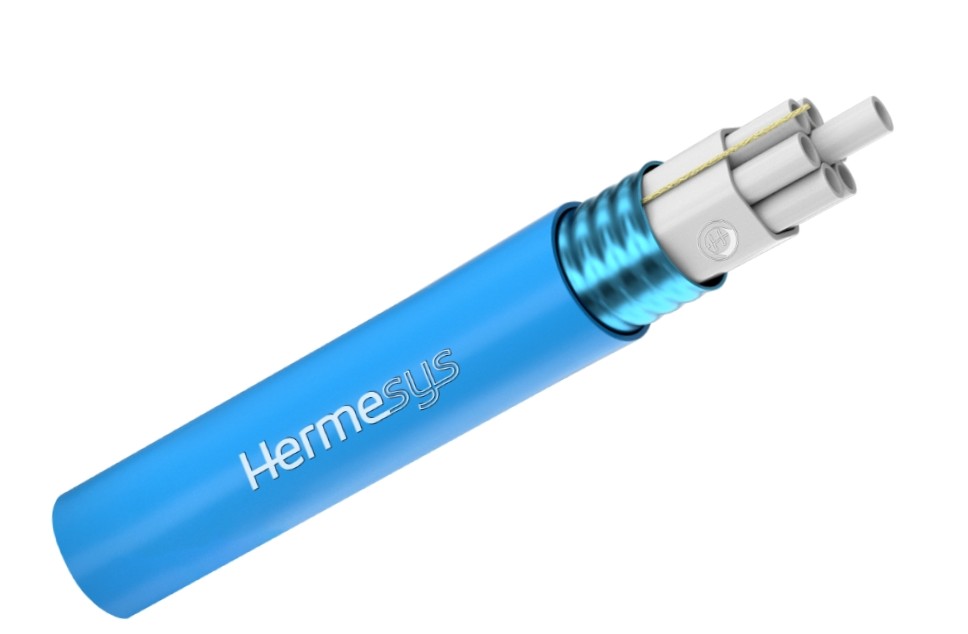
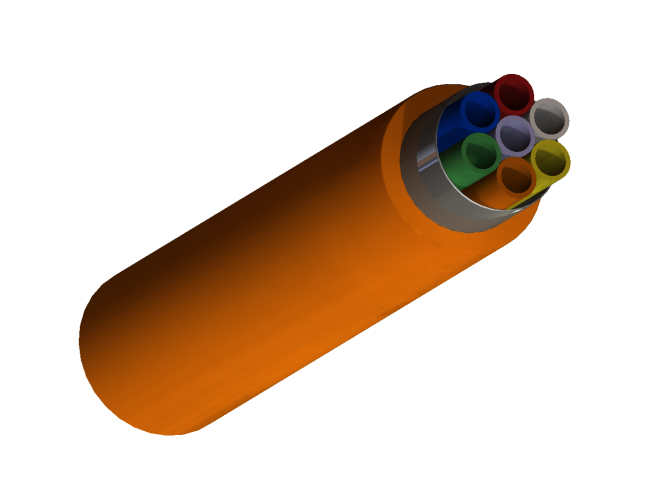
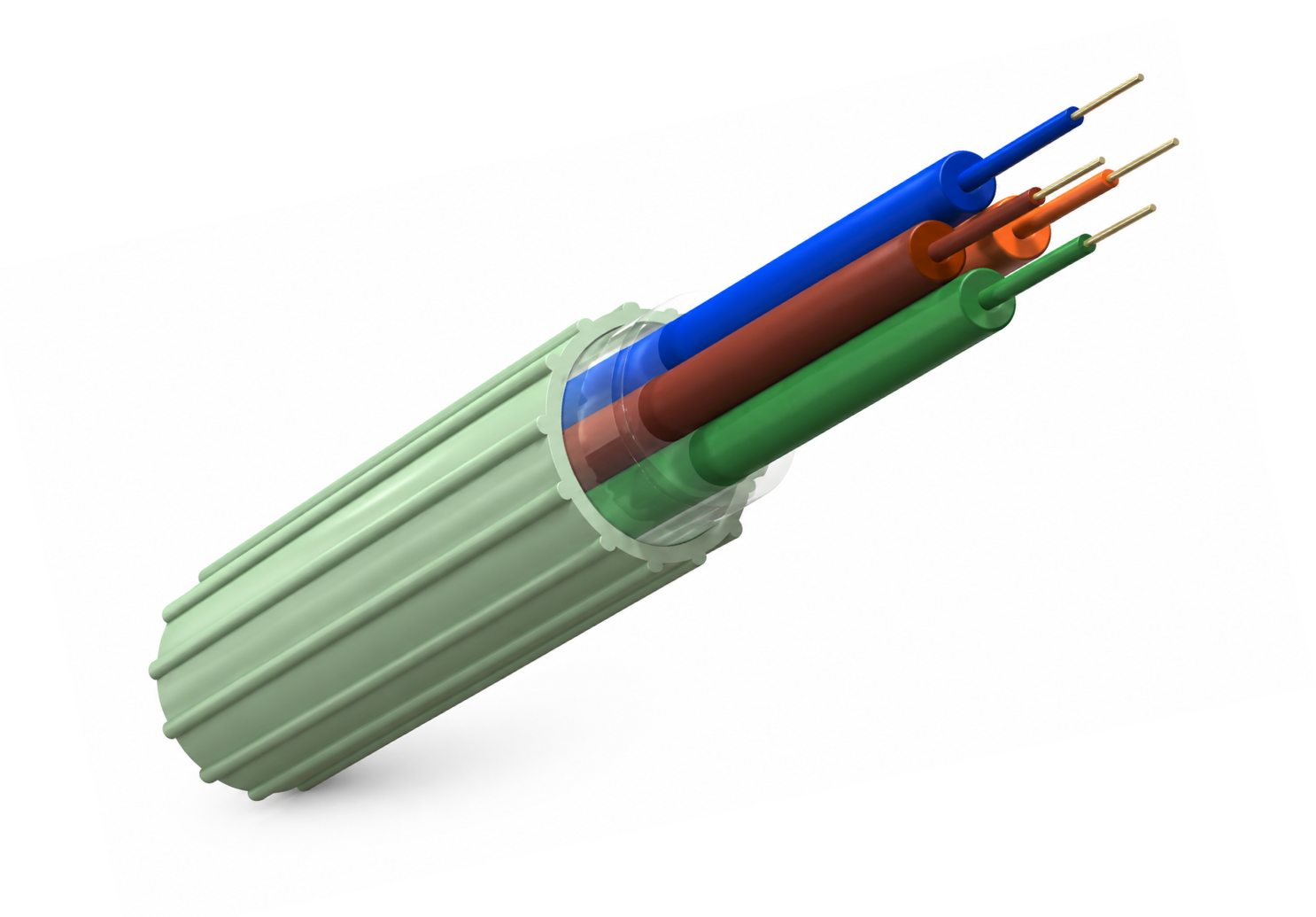
The Hermesys GryphonX™ Super Slim Microcable is an air-blown fibre optic cable built for high-density duct networks. Its slim, non-metallic construction keeps the cable light, so it blows further into a microduct than a conventional cable. The range spans 12 to 864 fibres, which covers everything from FTTH access drops to ultra-high-density long-haul backbone routes.
Key Features and Benefits
- Fibre counts from 12 to 864 let one cable platform cover FTTH access drops through ultra-high-density backbone links.
- Tight-bundle, non-metallic construction keeps the cable slim and light, which eases installation into congested microduct routes.
- Trajectory-designed outer jacket reduces friction against the duct wall. The cable can blow up to 2km in a single run under good duct conditions.
- Optional nylon outer sheath improves air-blowing performance on demanding duct routes.
- The 864-fibre variant packs ultra-high density into one cable, cutting the ducts and splice points a backbone link needs.
- Water-blocking yarn along the cable core protects the fibres from moisture ingress.
- A central FRP strength member supports the cable without adding the weight or corrosion risk of a metallic element.
Typical Applications
- FTTH Access Networks
- Long-Haul Telecom Backbone Routes
- Ultra-High-Density Duct Networks
- Air-Blown Fibre (ABF) Microduct Systems
Reference Standard
- ITU-T G.652D
- IEC 60794-1-1
- IEC 60794-1-2
- IEC 60794-3
- IEC 60794-5
Technical Data
Central Strength Member Material
FRP
Water Blocking Method
Water Blocking Yarn
Outer Sheath Material
HDPE (Nylon as option)
Outer Sheath Colour
Black (Nylon can choose Orange)
Attenuation @ 1310 nm
≤0.34 dB/km (Before Cabling) / ≤0.36 dB/km (After Cabling)
Attenuation @ 1550 nm
≤0.21 dB/km (Before Cabling) / ≤0.22 dB/km (After Cabling)
Min. Bending Radius (Static)
10 × Cable O.D.
Min. Bending Radius (Dynamic)
20 × Cable O.D.
12 ~ 288 Fibres – Fibre Count Variants
| Number of Fibre |
12 |
24 |
48 |
72 |
96 |
144 |
192 |
216 |
288 |
| Loose Tube – Number |
2 |
2 |
4 |
6 |
8 |
12 |
16 |
18 |
24 |
| Loose Tube – Outer Dia. (mm) |
1.20 ± 0.1 |
1.45 ± 0.1 |
| Filler – Number |
4 |
4 |
2 |
0 |
0 |
0 |
2 |
0 |
0 |
| Fibre Counts per Tube |
6 |
12 |
| Central Strength Member – Dia. (mm) |
1.22 |
1.60 |
2.25 |
1.60 |
2.00 |
| Central Strength Member – Dia. of PE Lay (mm) |
— |
— |
2.40 |
4.10 |
— |
2.80 |
| Outer Sheath Thickness (mm) |
0.50 (Approx.) |
| Cable Dia. (±0.2mm) |
4.50 |
5.40 |
6.10 |
7.80 |
9.10 |
| MicroDucts Dimension (mm) |
8/6 |
10/8 |
12/10 |
14/12 |
| Cable Weight (Kg/Km) |
16 |
26 |
29 |
48 |
74 |
Tensile Performance – Short Term (12–288F)
1.0 × Cable Weight (G, N)
Tensile Performance – Long Term (12–288F)
0.3 × Cable Weight (G, N)
Crush Resistance – Short Term (12–288F)
450 N/100mm
Crush Resistance – Long Term (12–288F)
150 N/100mm
864 Fibres – Ultra-High-Density Variant
Fibre Type
Loose Tube – Number
Fibre Counts per Tube
Central Strength Member – Dia. (mm)
Central Strength Member – Dia. of PE Lay (mm)
Outer Sheath Thickness (mm)
Cable Dia. (Nominal, mm)
MicroDucts Dimension (mm)
Cable Weight (Kg/Km)
200 µm Fibre
24
36
4.0
—
0.40 (Approx.)
12.5
≥16
133
250 µm Fibre
24
36
3.5
4.70
0.65 (Approx.)
15.5
≥20
205
Tensile Performance – Short Term (864F)
1000 N
Tensile Performance – Long Term (864F)
500 N
Crush Resistance – Short Term (864F)
500 N/100mm
Crush Resistance – Long Term (864F)
250 N/100mm