


On 21 August 2026, Singapore's Economic Development Board (EDB) and Infocomm Media Development Authority (IMDA) announced the outcome of the second Data Centre - Call for Application (DC-CFA2).
From more than 20 proposals, four operators were selected: Digital Realty, Equinix, Keppel Data Centres and ST Telemedia Global Data Centres. Each has been provisionally allocated 50 MW of new capacity, creating a combined total of 200 MW.
At first glance, this appears to be another allocation of data centre capacity. The evaluation priorities and capabilities represented by the four selected operators, however, point to a broader change in Singapore's policy: the competition is no longer only about who can build efficiently, but who can convert constrained resources into the greatest strategic and economic value.
What DC-CFA2 Asked Operators to Deliver
DC-CFA2 was launched on 1 December 2025 to support continued growth in Singapore's digital economy and AI infrastructure while keeping resource use under control. Successful proposals had to address three linked objectives:
- Strengthen Singapore's position as a trusted hub for AI, data centres and international digital connectivity, while improving infrastructure resilience.
- Create economic contributions beyond the data centre investment itself, including R&D, technology innovation, talent development and collaboration with Singapore-based organisations.
- Present a credible sustainability plan that can be implemented in practice.
The four selected operators committed to exceeding the minimum sustainability requirements, including powering more than 50% of their data centre capacity with green energy, deploying advanced technologies such as liquid cooling, using highly energy-efficient IT equipment and meeting Green Mark Data Centre Platinum requirements.
Eligible pathways include biomethane, low-carbon ammonia, low-carbon hydrogen, fuel cells with carbon capture, and building-integrated or building-applied photovoltaics. Together, these requirements show that DC-CFA2 is evaluating the wider value each proposal can deliver to Singapore.
The Scarce Resource Is Every Megawatt
Singapore faces an unusually tight set of development constraints. Demand for AI, cloud computing and digital services is growing rapidly, yet land, electricity and water are limited, and expansion must remain aligned with national decarbonisation goals.
The key question is no longer how much data centre capacity Singapore can build, but how much value each constrained megawatt can create.
Low PUE, financial strength, reliability and construction capability remain essential, but they increasingly look like entry requirements rather than final differentiators. A competitive proposal must also connect new capacity to advanced computing, international connectivity, local R&D, talent development and credible low-carbon energy outcomes.
What the Four Selected Operators Reveal
EDB and IMDA did not disclose individual applicant scores or the full content of each proposal. The following comparison is therefore an interpretation based on published priorities and publicly available information, not a claim about the authorities' undisclosed reasons for selection.
How the Rules of Competition Are Changing
1. Building capability is the baseline
Construction capability, financial strength, PUE, reliability and delivery speed remain essential. The differentiators are increasingly the additional outcomes a project can deliver: deployed computing capacity, local R&D, talent development, international connectivity, energy innovation and measurable long-term economic value.
2. Energy strategy begins at the design stage
Energy can no longer be treated simply as a utility connection added after the facility is built. Sources, storage, microgrids, low-carbon fuels, load management and thermal utilisation must be considered from the earliest stages.
3. Efficiency must extend beyond PUE
PUE measures the relationship between total facility energy and IT-equipment energy, but it does not show how much useful computing output is produced. Future assessments are likely to consider the efficiency and utilisation of servers and accelerators, workload value, and digital output per unit of energy, water and carbon.
4. Cooling architecture must match the workload
The future is unlikely to be a simple replacement of air cooling with liquid cooling. High-density GPU systems may require direct liquid or immersion cooling, while network equipment, storage and lower-density devices may remain air-cooled.
5. The physical layer must remain upgradeable
AI chips, network speeds and rack power densities can evolve faster than the building itself. Data centres need high-density fibre connectivity, low-loss optical links, structured cabling architectures that can evolve from 400G and 800G to 1.6T and beyond, and cable pathways compatible with liquid-cooled equipment.
6. Data centres are becoming part of an industrial energy system
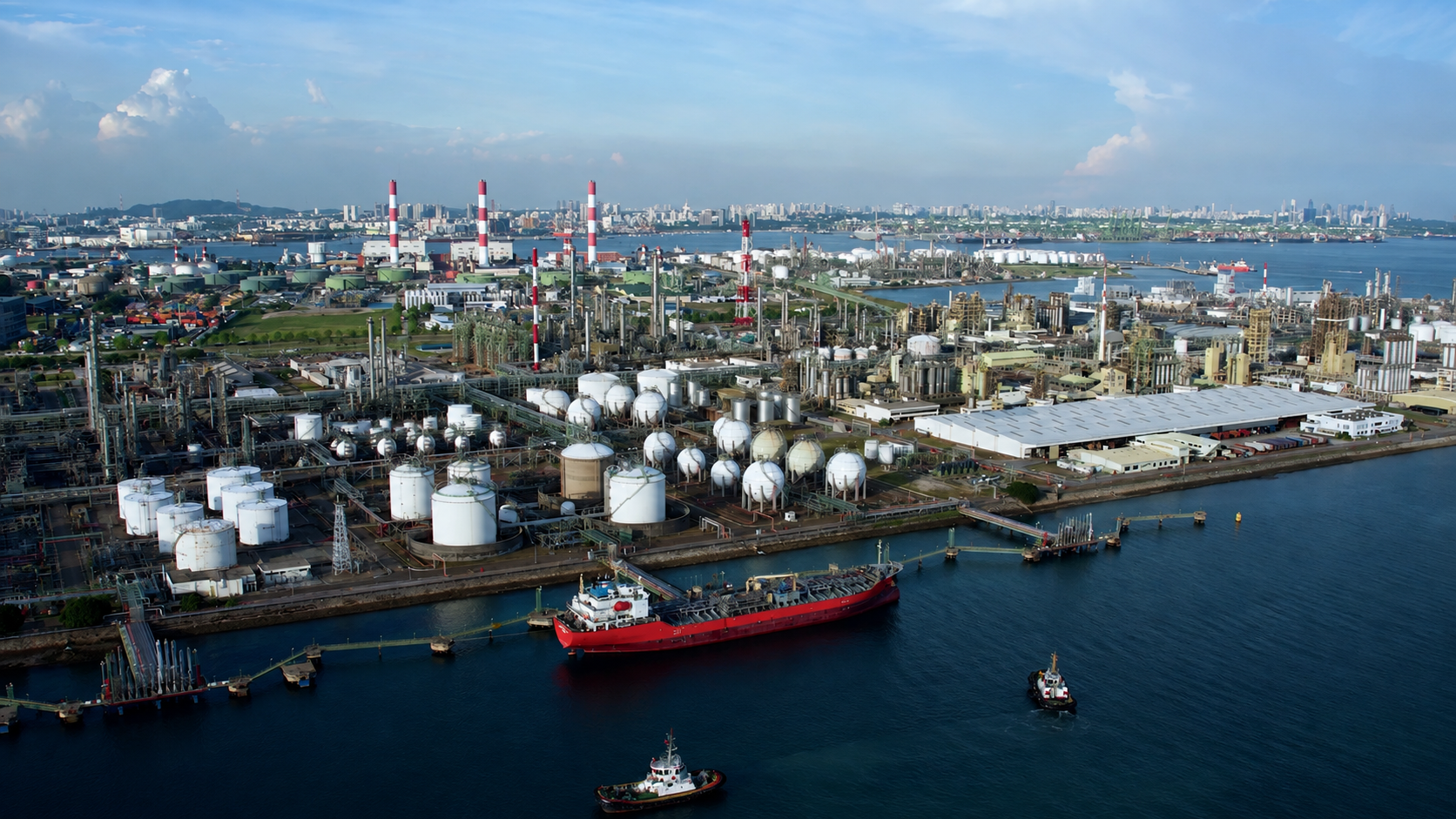
Locating the projects on Jurong Island creates opportunities to connect data centres with low-carbon fuels, shared utilities, energy storage, microgrids and thermal systems. The long-term model is a wider ecosystem in which digital infrastructure, energy and industry support one another.
What This Means for Data Centre Physical Infrastructure
The shift identified in DC-CFA2 reaches all the way down to the physical layer. If a facility is expected to accommodate changing compute platforms and cooling methods over many years, cabling and connectivity can no longer be designed only around today's equipment layout.
- Fibre density must scale without creating unmanageable congestion inside racks and pathways.
- Optical performance must support higher speeds and tighter loss budgets as networks progress towards 800G and 1.6T.
- Cabling routes, patching systems and rack layouts must coexist with liquid-distribution infrastructure and mixed cooling architectures.
- Modularity and clear migration paths are essential to avoid disruptive physical-layer rebuilds during technology refreshes.
- Documentation, testing and lifecycle management become increasingly important as connectivity environments grow denser and more complex.
For cabling and connectivity providers such as Hermesys, the implication is clear: the physical layer must be engineered not merely for current port counts, but for the next several generations of compute, cooling and network architecture.
From Capacity Allocation to Value Creation
DC-CFA2 does not remove the fundamental requirements for power, cooling, connectivity and reliability. It changes the level at which projects must compete. A 50 MW allocation is not, by itself, the final source of value. What matters is whether that capacity can be converted into advanced computing, international connectivity, local innovation, talent development and credible low-carbon outcomes.
The four selected operators each illustrate a different capability: global platform reach, enterprise interconnection, energy integration and AI-ready operations. Together, they suggest that future data centre competition will extend across the entire technology, energy, economic and industrial ecosystem.